Dental disease is extremely common in cats and can start to appear when your cat is about three years old. If left unchecked, it can progress as dental plaque and tartar continue to build up over time.
How to keep your cat’s teeth healthy
There are several things you can do to keep your cat’s teeth and gums in good condition:
- Diet. Including some dry food in your cat’s diet can help to prevent plaque formation due to abrasive action when chewing.
- Brushing. It may sound strange, but daily brushing can help. Your vet will advise which products to use and show you how it’s done. Many cats get used to having their teeth brushed, especially if they are quite young when you start.
- Regular examinations. Just like humans, regular brushing and good diet isn’t enough to guarantee healthy teeth. Plaque and tartar tend to build up over time anyway and you should have your pet’s teeth examined at least once a year. Your vet may recommend a descale treatment which will be carried out under anaesthetic.

Tooth resorption
Tooth resorption is the second most common feline oral issue and affects more than a third of adult cats. FORLs are relatively uncommon in cats under 4 years of age and become apparent in middle age. The average age is a little under 10 years old.
The condition occurs when cells called odontoclasts destroy the tooth’s surface. The lesions, also known as Neck Lesions, Feline Cavities, and Root Resorptions, are progressive lesions that attack the tooth beneath the gum line. The gum tissues become inflamed and then start to break down the outer layer of the tooth, the hard enamel. We call these Class 1 lesions. If unstopped, the damage progresses, eating through the softer dentine (Class 2) and into the sensitive pulp cavity around the nerve (Class 3), at which stage they are very painful. Eventually, the tooth is so weakened it is susceptible to fractures and may snap off, leaving the root behind in its socket (Class 4).
Not all cats get FORLs, but as soon as one is seen we know that the cat is predisposed to FORLs. In early years only 1 or 2 teeth may be affected, but the lesions can reoccur in any tooth over a period of time. It is unpredictable which teeth or how many teeth may be affected, if any, and over what time period.
What are the symptoms?
Cats are very tough and stoical creatures and often symptoms are hidden. Many lesions are only found at veterinary examinations. The most common symptom is discomfort when eating. The worse the lesion becomes, the more painful it is. Although some cats may show obvious signs of pain, in most cases, the condition is characterised by slow eating, eating with the head tilted or only chewing on one side, reluctance to eat, a sudden preference for softer foods or pain when the affected side of the head is touched. Other symptoms include:
- Dribbling
- Pawing at their face
- Tooth loss
- Weight loss
- Bloody saliva
- Swelling around the mouth and jaw
What causes them?
The cause is not yet known. A widely accepted theory is that the FORLs are an abnormal response of the cat’s immune system – an inflammatory reaction that results in an exaggerated reaction of the cells at the gum line, and as a side effect, damage to the teeth.
How are they diagnosed?
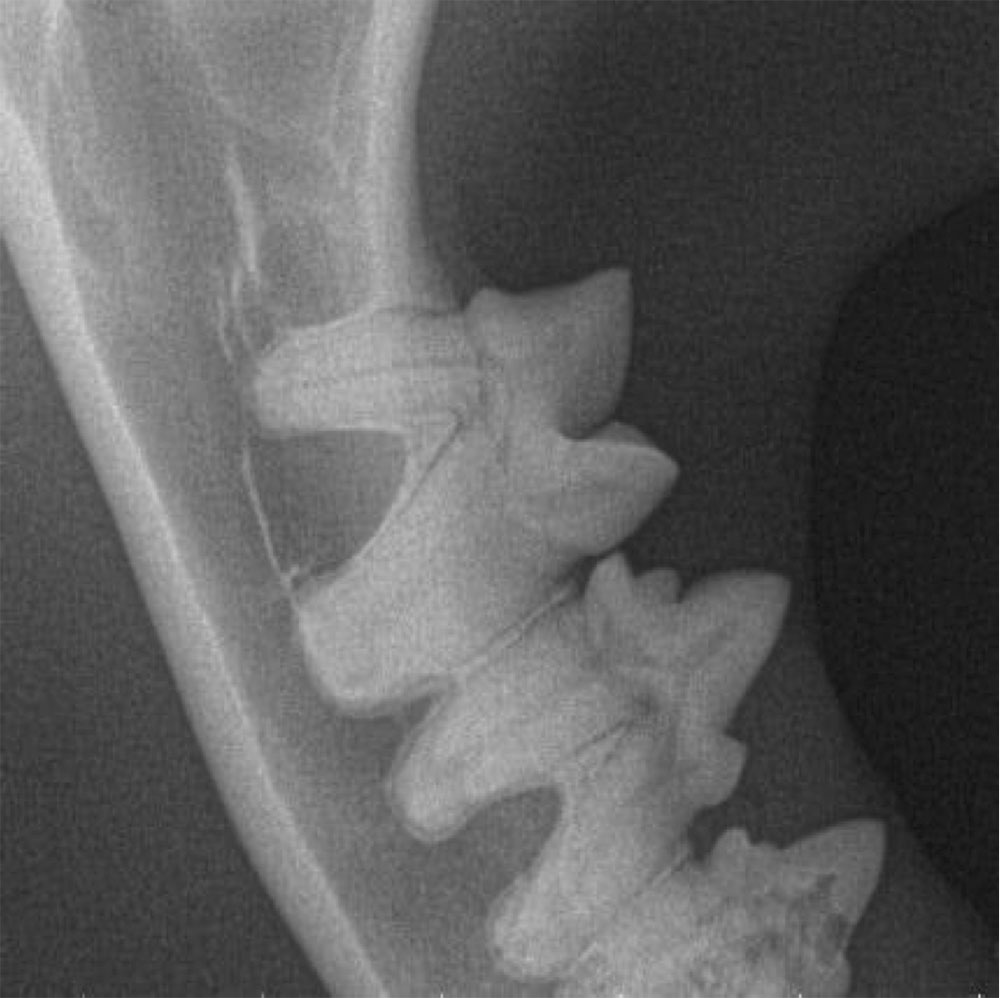
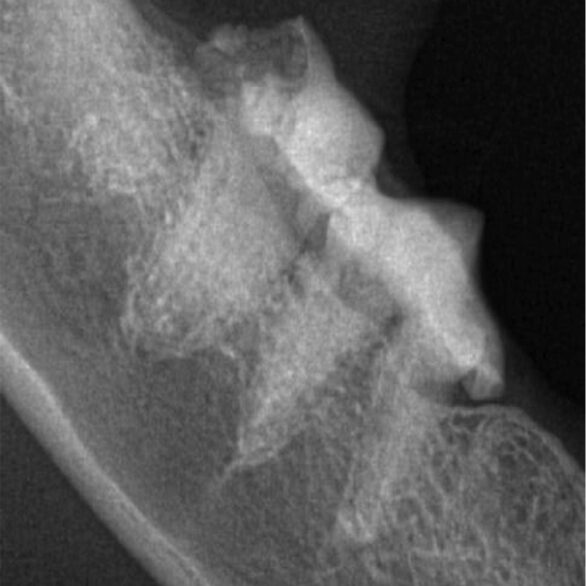
Because they start below the gum line the most sensitive way to diagnose a FORL is with radiographs, using a specialised dental X-ray system to allow us to locate and diagnose the lesions before going to surgery, minimising the risk of damage to the delicate tooth roots. FORLs may be visible above the gum line during routine examination at the vets, during dental surgery, or because an apparently healthy tooth has snapped off.
The images below are radiograph images and demonstrate how this technique is used to identify the condition. The image on the left shows healthy teeth, whereas the image on the right shows lesions and the progression of resorption.
What is the treatment?
Most lesions require tooth extraction. It is vitally important to remove the roots if they have not resorbed (only x rays can identify if this is the case), as otherwise the lesions (and the pain and distress they cause) will continue underneath the healed over gum. Dental extraction is a complex procedure since the tooth is usually very fragile and can fracture. The vet may use dental x-rays to help find and remove fractured root fragments. At our clinic We regard this as an essential step to guide the vet in using the best extraction technique for your cat, as this can vary from case to case.
Can feline resorptive lesions be prevented?
Because the cause of tooth resorption in cats is unclear, it’s not possible to prevent it effectively. Regular dental checks with your vet are the best way to identify any issues early on, in order to avoid pain or discomfort. It is not proven that regular dental care (especially tooth brushing) gives protection against the lesions, although brushing will reduce the numbers of bacteria present and thus reduce the stimulation of the immune system. Tooth brushing is more important in preventing another disease called periodontitis.
If your cat is showing signs of mouth pain, or it’s been a while since you’ve had their mouth checked by a vet, you can make an appointment below:
Need to see a vet in Oxford?
If your cat is ill, or you are concerned that they are just not quite right, then book to see one of our cat-specialist vets. If you’re not registered with us, then you can register here or give us a ring on 01865 243000.